Showing posts with label Productivity. Show all posts

How Insecurity Kills Productivity And What To Do About It

You'll know insecurity is festering in your workplace when you start loathing the next meeting you go to… and worse, when you leave that meeting feeling frustrated, angry or tense.

If your boss was leading that meeting, watch out. Don't expect him to change. Don't attempt to change him.

My best advice is to move. Move sideways. Move up. Or move out. Your life is too short to be stuck in a quagmire of backstabbing, belittling and bullying.

But, if you were the leader of that awful meeting, it was your fault. And you can fix it.

Insecurity as Productivity Killer


Where is this feeling of insecurity coming from?

Your world of family and friends has expectations of you. Can you meet them? How much you doubt yourself, you'll feel insecure.

But know, most of us have at least some sense that, "Someday, we'll be found out… I'm just masquerading through all this." It's okay to feel doubt. A little can boost your productivity.

But too much insecurity? This will lead to:
  • Stifling curiosity and extinguishing innovation
  • Too much short-term focus, and not seeing the bigger long term plan
  • Wasting energy by always trying to impress people
  • Growing insecurity in your team members, because people tend to mirror the behaviours of their leaders
It's quite likely you've got all the logical and analytical skills to do your job. You have the IQ. All too often, though, you lose your compassion and empathy when you step into leadership positions. It's stemming from your insecurity.

And if you're feeling too much insecurity, you're likely weak in the area of EI.

Emotional Intelligence Is The Cure


In the 1990s, Daniel Goleman popularized the concept of Emotional Intelligence (EI) in his book Emotional Intelligence: Why It Can Matter More Than IQ (1995, Bantam Books).

Goleman defines EI with four ability dimensions related to your emotions and the emotions of others:
  1. Being self-aware of your own emotions in the present moment
  2. Managing your emotions in the present moment (like staying calm in stressful situations)
  3. Understanding the emotions of others through empathy and organizational awareness
  4. Managing your relationships with effective communication and extending an honest helping hand to others.
High intelligence isn't as valuable as being self-aware, level-headed, empathetic and anxiety-free.

Mean, aggressive behaviour is not a character trait that pays off over time. (Sorry Gordon Ramsay. You make for entertaining TV, but you're nothing we should be modelling in real life.)

So what should we be modelling?

How To Cultivate Emotional Intelligence


Goleman asserts that we can all learn EI. It isn't something relatively fixed at birth like IQ.

It starts with awareness.

The goal is not to become a self-control brute who keeps emotions under control. Change comes from being aware of your emotions.

Be in the present moment and be intentionally aware of your current thoughts and actions.

Start with meditation. You don't need to go to lotus-land to do this. You can sit still. You can go for a walk. You can go for a run or a bike ride. Focus on your breath.

Whatever your modality for meditation, you need to get to a mind state where your background information processing comes to the surface. And then you tell it to go away.

Think about your body and what it is doing right now, in the present moment.

Intruding thoughts will inevitably be about some past or future concern you hold. Acknowledge the thought, but tell it gently, "Not right now. Be on your way."

With practice — even just five daily minutes of mindfulness — you can grasp stability and self-possession. This allows you to hear subtle messages in your conversations with others. And it can keep you from reacting with immediate passion to those messages. You'll be calm when it's really needed.

It's this type of dispassionate thought that Yale psychologists Peter Salovey and John Mayer found correlated with success outcomes in their 1990 experiments in EI.

And cultivating mindfulness is what US Congressman Tim Ryan advocates in his book A Mindful Nation: How a Simple Practice Can Help Us Reduce Stress, Improve Performance and Recapture the American Spirit (2012, Hay House).  

Leaders Beware


When you find yourself as a leader, in any position of power, you'll lose some EI. You'll tend to focus on your own needs. You'll begin to think the principles of EI no longer fully apply to you. You'll be thinking, "Hey, I'm in control here now." And you'll be wrong.

You need to continually work on the neural pathways supporting your self-awareness. This will help you to build even better social skills.

There's a story about Gandhi to consider here. He would spend at least an hour a day in meditation. One of his backers told him he was far too busy to meditate. Gandhi replied, "Well, then, I now need to set aside two hours a day to do meditation."

By Kevin Rokosh

References:
strategy + business: Tea and Empathy with Daniel Goleman
Daniel Goleman: How To Hear Your Inner Voice
strategy + business: Don't Let Insecurity Infect Your Business

Why You'll Never Succeed At Work-Life Balance

Do you have a job, or a calling? This is the key to unlocking the mystery of Work-Life Balance.

At the end of your workday, are you looking forward to leaving the desk behind? Or would you rather spend a little more time there because you really don't want to shut down? Your mind is still bubbling with ideas.

But if you can't wait to head home, for the sake of a sane life I hope you'll find your calling.

Life is far too short to be punching clocks the whole way through. Yes, a certain degree of going through the motions will be necessary. Discovery is a sweaty process. Dangerous even. Just look what happened to the Franklin Expedition. Self discovery can be like that too.

Surprise and disappointment are sage — and sometimes sadistic — teachers. Learn from these philosophers.

But while you're working — or should I call this exploring — look for clues that point you in the direction of your calling.

Capture the clues. Keep a journal every day. Use a voice recorder. Even a simple stack of index cards works well for recording ideas.

Schedule a weekly review appointment with yourself and cull those clues.

Yes, make it an appointment on your calendar. There's about a 75% greater chance you'll do the review if it's placed on your calendar.

It'll be messy at times. Embrace the mess.

But once you find your calling, you'll begin to smile. Happiness and fulfillment will follow. And those emotions are infectious. Your friends and families will also begin smiling around you more often.

Forget looking for work-life balance. Find life in your work.

While engaged with friends, keep the ideas bubbling. You can have fun and think at the same time, can't you?

Just have a system for capturing those ideas as they arise while dancing through the rest of your life. Remember the journal, the voice recorder, the index cards.

The world needs your ideas, your energy. Don't turn them off. Work and life don't have to be separate. Guilt is born from thinking they should be.

You'll never succeed at work-life balance because there is no balance.

There is only life. It's calling. How will you answer?


Now Where Was I?

Being a freelance writer means I've got lots of projects — big and small — on the go all the time. To keep each one moving forward, though, I often feel like a flea jumping around and taking little nibbles here and there.

I have a couple of handy strategies to get me moving quickly when I jump back into a project. Without these tips, I waste time answering the question, "Now where was I?"

The To-Do List


My best strategy is the to-do list. Here's how to build them for maximum results:

For each project you work on, define an overarching "Special Project" task. This is not really a task, because a task should be the one thing you can do to move forward.

The Special Project is a complete definition of what you're trying to accomplish. It has the following elements: Outcome, Tasks, Metrics, and Notes.

Outcome: This is just a simple sentence or two that describes the final end result.

Tasks: These are the individual steps that you need to work on to reach the Outcome.

When breaking a project down, it helps to think backwards. Read your Outcome statement. What do you think would be the last thing to do before reaching your Outcome? Write it down. Look at that Task, and ask the same question again. What would be the last thing you do before you can work on that Task? Write that down next.

Keep going backwards in time until you've got all your Tasks defined for the Special Project.

Metrics: These are anything that you can measure or report on that will show the forward movement to your Special Project completion.

When you complete a Task, move it from the Task list down into the Metrics area and mark it DONE.

For example, if you're writing an eBook a Task that becomes a Metric might be "Complete Outline". Cut it from the Task list and paste it to the Metrics list. Then mark it DONE.

Or maybe you want to contact 25 prospects for your copywriting business. In the Metrics section you'd record, "Prospects Emailed: 6/25". Keep updating it until you hit 25/25.

Notes: Drop any ideas into this section that are relevant to your Special Project.

Use this section to catch your fleeting thoughts. Your mind works better at creating ideas when it's not busy trying to remember them all. Unload your mind here and let this list hold your ideas.

Glancing over this entire breakdown of your Special Project makes it easy to answer the "Now where was I?" question. Quickly you can see your end result. Quickly you can see what task you should be working on. Quickly you can get an overview of how far you've come, and how far you've yet to go.

Stop In The Middle


Don't think of this as "Stuck in the Middle."

You can stop right in the middle of an article or right in the middle… of a sentence.

Either way, you plant a seed of intention in your mind. Your subconscious is aware you've got unfinished business to attend to.

This helps launch your mind right back into the thinking for your project. It also adds a sense of urgency to get back and finish what you've been working on.


These strategies let me take nibbles or chomps from my projects. They keep me moving forward.

If you've got some some crafty methods of your own, please share them in the comments.


By Kevin Rokosh


Are Open Offices False Economy?

Open Office
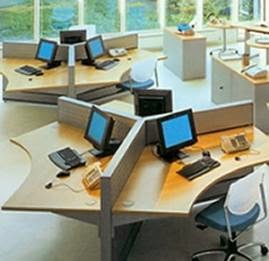
Some people feel the open office concept is a hip new trend. Picture an industrial warehouse with tables and chairs and computer monitors from wall-to-wall. Cool. But somewhat "as seen on TV".

Perhaps that's exactly where the trend has come from... and where it should stay.

20 years ago I moved into an open office space. (See, it's not so new after all.) My job at Nav Canada was starting up after a transition from Transport Canada. We moved into a new building with workstations clustered into groups of four. Our desks were simple L-shapes and we sat with our backs completely open.

If you were lucky at least you had full height cube walls in-front, shared with the other people in your "pod".

If you weren't so lucky your wall was only about a foot high, letting you see and hear everything your co-workers were up to.

The cube-farm we had come from wasn't perfect either. At least it gave me some privacy, some quiet to let me to analyze radar data and write my reports.

The new space offered little of this. Our engineering work wasn't driven by the "collaborative thinking" created by such work spaces. Company management hadn't even talked to us about what we needed.

Even today I don't think management considers what their employees really need. They might not admit it, but TV images influence them. And of course there's the economics of the set-up. Maybe money is driving the continuing trend of open office designs.

Consider the cost of renting a traditional office space at about $2.50 per square foot versus 69¢. Then throw a bunch of simple tables in there... and presto, instance office! Just add workers! And sweat. And frustration.

Here's a sampling of some complaints about such workspaces that I read in an article on Businessweek.com:
  • The reality is that open office space does not result in high productivity. It results in lower productivity because of all the distractions. It's difficult to concentrate when people around you are on the phone... Or when they're "collaborating" about their commute into the office.
  • Not every business or office is collaborative! We don't all need access to our co-workers every moment of every day.
  • Open office plans allow non-performers to interfere with the productivity of performers.
  • What's worse is loud executives who "manage by walking around". Most have non-relevant conversations with their staff.
  • Putting 50+ introverted creatives all in a room staring across from each other can create quite an awkward and taxing day... Day in... Day out...
  • Why don't organizations understand that a diverse range of employees makes the organization better? That means allowing for a diverse range of work environments. There are people who naturally do well in open spaces and others fail miserably.
  • It's initially cheaper, but the lost in productivity means you might be losing more money in the long run.
But there are a few people who benefit:
  • In the late 80s, I worked for newspapers, and newsrooms tended to be noisy and open, lots of give and take. The AP machine was clacking away and the room was smokey and everyone was on the phone interviewing at the same time. You wrote the story with people all around you... Copy editor yelling for it... Production asking you to take a look... Press men in the back waiting for you to finish up. It was cool.
  • If you are working as a team or a lot of your job involves regular interaction with your team then I think this is big. I really like it because of the social aspect. Work is a lot more enjoyable when you have people to talk to (provided you like your co-workers).
  • As an extroverted person with good co-workers, I love it.
  • I prefer having an open office environment that allows me to collaborate with other departments. I want options that keep me from the seclusion of a cube environment. I feed off the energy of other people and the open workspace environment starts my day off productive and energized.
I agree there is an aesthetic design appeal to industrial spaces. But employees are more than just furniture. First they need to be productive. Depending on the nature of their tasks, that might need an open concept or it might need a closed concept. The key for management is to know the difference and have spaces designed for each.

One-size-fits-all is not the solution.

I'm a writer who works from home now. My main office where I do all my writing has walls of windows looking onto my garden. My other "office" where I do much of my thinking is my bicycle. It has no walls - only open roads and open skies. And sometimes the coffee shop environment works well too, but usually just for reading.

As you can see, even as a company of one employee I too have many office environments. Management listens to me. And that should be the take-away lesson.


By Kevin Rokosh

7 Ineffective Habits

One of the few self-help books that has ever worked for me is The 7 Habits of Highly Effective People: Powerful Lessons in Personal Change by Stephen R. Covey.

Briefly, Covey says those seven habits are:
  1. Be proactive
  2. Begin with the end in mind
  3. Put first things first
  4. Think win/win
  5. Seek first to understand... then to be understood
  6. Synergize
  7. Sharpen the saw
Recently, The Guardian newspaper began a "Work Better" series of articles. It started with a riff on Covey's classic: 7 habits of highly ineffective people.

Here are my thoughts on the ineffective 7 that article author Robert Kelsey listed...

1. Procrastination

Despite prompting - you still do nothing. Once the pressure is gone, you revert to your old state. Strap a rocket to your back and head to the moon. You only need to break free of the gravity of your old ways... Then momentum will get you the rest of the way.

2. Avoiding direction

If you don't have any idea who you want to be in 10 years, you'll have no idea how to act in the next 10 minutes. (Yes, that's an echo of Warren Buffett's, "If you aren't prepared to own a stock for 10 years, don't even think of owning it for 10 minutes." But I think it works here in this context too.) See Matthew McConaughey's 2014 Academy Award acceptance speech about chasing his hero... the version of himself 10 years away.

3. Blaming others

This is outsourcing your own fate into the hands of others. And they won't care about you as much as you do.  Take responsibility and be as self-reliant as possible.

4. Obsessing about others' impact on us

It is okay to have a hero or mentor to inspire us. But what if you could become the inspiration for others? How effective might that be?

5. Having a fixed mindset

Do you believe who you are and what you can do has already been programmed? If so, you'll spend your life on the treadmill of proving your self-worth to others, over and over. Understand, you can "always be learning" and your life will open up to opportunity.

6. Ignoring progress

The ineffective tend to see positive results as "too little, too late." Realize, though, that progress is progress. Be grateful for it... A mind experiencing gratitude cannot simultaneously feel self-pity. There is power in gratitude. Be actively gracious for every small step of progress you make.

7. Every setback is a derailment

You've experienced a failure - hence you are a failure. How effective is that strategic thinking? If you even feel a twinge like that when faced with a setback, take it as a cue for self-improvement. Understand you are battling your own fixed mindset - see #5 above. Instead, what can you learn? Then move on.


Most of all, effective living boils down to answering this question, moment by moment: "What can I do right now to move forward?"

By Kevin Rokosh

These Social Media Tools Do Some Heavy Lifting

If you're a one-person freelance shop, then I'm sure you'll want to have some tools that can do 2 or more jobs for you at the same time.

Here are 5 such tools that Larry Chase recently shared in his free Web Digest for Marketers newsletter. Most have a basic free version available, with paid upgrades to more features:

1. Social Crawlytics -Analyze your own site or a competitor's. This tool generates a report telling you: what content is getting shared the most; who is doing the most sharing; and which channels are being used the most. Use the results to model the best strategies that are working for others in your niche. Prune your own strategies that aren't working.

2. Piktochart - You don't need to be a graphic designer to create your own infographics with this tool. It's popular right now to share infographics on Twitter, Facebook and Google+, so why not try to create a few of your own?

3. NeedTagger - Are you serious about using Twitter to prospect for customers? Then this little tool lets you dig in and get the results. Get to know your prospects with laser-focus by zeroing in on what they're saying on Twitter. Any good copywriter will begin with a clear picture of his prospect. This tool will help you detail that picture.

4. Friends+Me - I like this tool's tag line: Do More By Doing Less. Do you have some great content to share across all your social network channels? Through Friends+Me you post it once to Google+. It's then automatically reposted it to all the other networks of your choosing. The free version let's you enable 2 non-Google+ accounts for reposting. More accounts requires a monthly fee, starting at $2/month for 10 accounts.

5. Scheduled Tweets - Twitter provides this tool for their ad customers. Instead of assigning an employee to tweet your Promoted and Sponsored marketing campaign in real-time, this tool schedules them. You can also use it to schedule your regular tweets. You must be a Twitter ad customer to use this tool.

By Kevin Rokosh

3 Things About To-Do Lists That David Allen Would Tell You


Productivity guru David Allen didn't invent the To-Do List, but he certainly created a process to use them for successful living.

I've been using my own version of his Getting Things Done (GTD) system, and it has made a big difference in my life. However, there are times when the system breaks down. But it's not the system's fault... It's my fault.

The beauty of GTD is in the mind-lifting freedom you feel when you no longer worry and fret about remembering all the things you need or want to do as they slip around the catacombs of your wet-brain. Capture your things-to-do in a GTD system, work the system, and live a nearly stress-free life.

In theory...

In his Productive Living newsletter, Allan shared these three ways that the GTD system can fail, and what you should do about it:

  1. Consistency -Keep all of your To-Do items in the same place, in the same kind of media. DON'T put some reminders on paper lists, others on sticky-notes, and still others on your smartphone. That creates confusion. You want simple. When you need to capture a To-Do item, you don't want your first question to be "Where do I put this?" The "where" should always be one place, one media. I have one list that is stored in the cloud on my Google Tasks list that I have sync'ed to the GoTasks app on my iPod (it would be on my iPhone if I had one, but I don't even have a smartphone). My iPod is almost always in my pocket, so my To-Do list is always with me. If I need to do a lot of data entry or revision work, I'll open up Google Tasks on my desktop computer. Otherwise, I manage it all on my iPod.
  2. Currency - Keep your list up-to-date. You must TRUST your list, and the only way your brain will trust it is if you keep it current. When I look at my GoTasks app on my iPod, I know everything is in there.  I want to open that app because it is my KEY to remembering everything. I keep the list current by visiting it for 10 minutes every morning. Once a week I'll spend a longer session with it, going through everything and culling what I know I don't need any more, and raising the urgency of the items that have evolved. Some may say my GTD system has taken over my life. I would say it is my partner in a life well lived.
  3. Contextual Availability - Each sub-list in your GTD system needs a context relating to either the "how you're thinking about something" and the "where you do something." My GTD system has three main sub-list contexts: Managing Objectives; Strategic Projects; Next Action Items. Next actions map to Projects. Projects map to Objectives. Objectives are the who and what I want to be in life. Projects are the multi-step Big Ideas that I need to execute to become my Objective self. Next Action items are the individual steps in those Projects. When it gets right down to the bitty-gritty of what I do from moment-to-moment, I'm working on my Next Actions. And those I categorize with a place or activity context, like "Desk", "Phone", "Errands". When I'm sitting at my desk, I just need to look at my "Desk" list to know everything that can and should be done while I'm sitting there. If I'm blocking off some time to make phone calls, I only need to look at the "Phone" list to know who needs calling, and what I need to discuss with them. If I'm leaving the house, I can batch many small errands together on trip by looking at my "Errands" list. When I'm doing some Big Idea thinking, I'll only open my Strategic Projects list, review what I've got there, and create a new project if a Big Idea really speaks to me. And when I'm really trying to keep the overall integrity intact of the vision of the life I'm trying to lead, I only need to read through my Managing Objectives. My longer once-a-week "Currency" session mentioned above is really all about keeping the mapping intact among these three main sub-list contexts.
If you haven't already done so, I highly recommend grabbing a copy of Allen's seminal book, Getting Things Done: The Art of Stress-Free Productivity.


By Kevin Rokosh

18 Great Articles About Procrastination

It's February already... Where did all your New Year's Resolutions go?

Most everyone procrastinates at some point. Some of us more often than others. If this new year is already setting you back, here are 18 great articles about slaying the procrastination beast. Check them out. I'm sure you'll find something worthwhile... At least reading them will be a constructive distraction while putting off that project you should really be working on!

  1. 7 Ways You Can Push Past Procrastination 
  2. The Power of Ritual: Conquer Procrastination, Time Wasters and Laziness 
  3. The Single Word that is Stealing Your Future 
  4. 10 Surefire Ways to Overcome Blogging Procrastination
  5. Modern procrastination  
  6. 4 Reasons You Procrastinate and How to Break the Cycle 
  7. Overcoming Procrastination 
  8. My Fav Procrastination Hack – 30-10
  9. How to Stop Procrastinating
  10. The One Factor That Changes Everything
  11. Too busy? Maybe you're procrastinating
  12. Procrastination Occurs In The Shadows
  13. Stop Procrastinating Already
  14. Finding What Works for You: How to Out-Think Your Procrastination
  15. The agony of creative blocks and how to remove them 
  16. Hey, Stop Procrastinating and "Do the Work" 
  17. Finishing and Starting
  18. How To End Procrastination With These Stephen Covey Quotes
If you can't find something that will work for you in one of these articles, then the sulfur-breathed beast that is Procrastination has branded you his slave - for eternity!

By Kevin Rokosh